
Camino de Santiago - Burgos
Part 3 - All the way to Burgos (This is of course over several days)
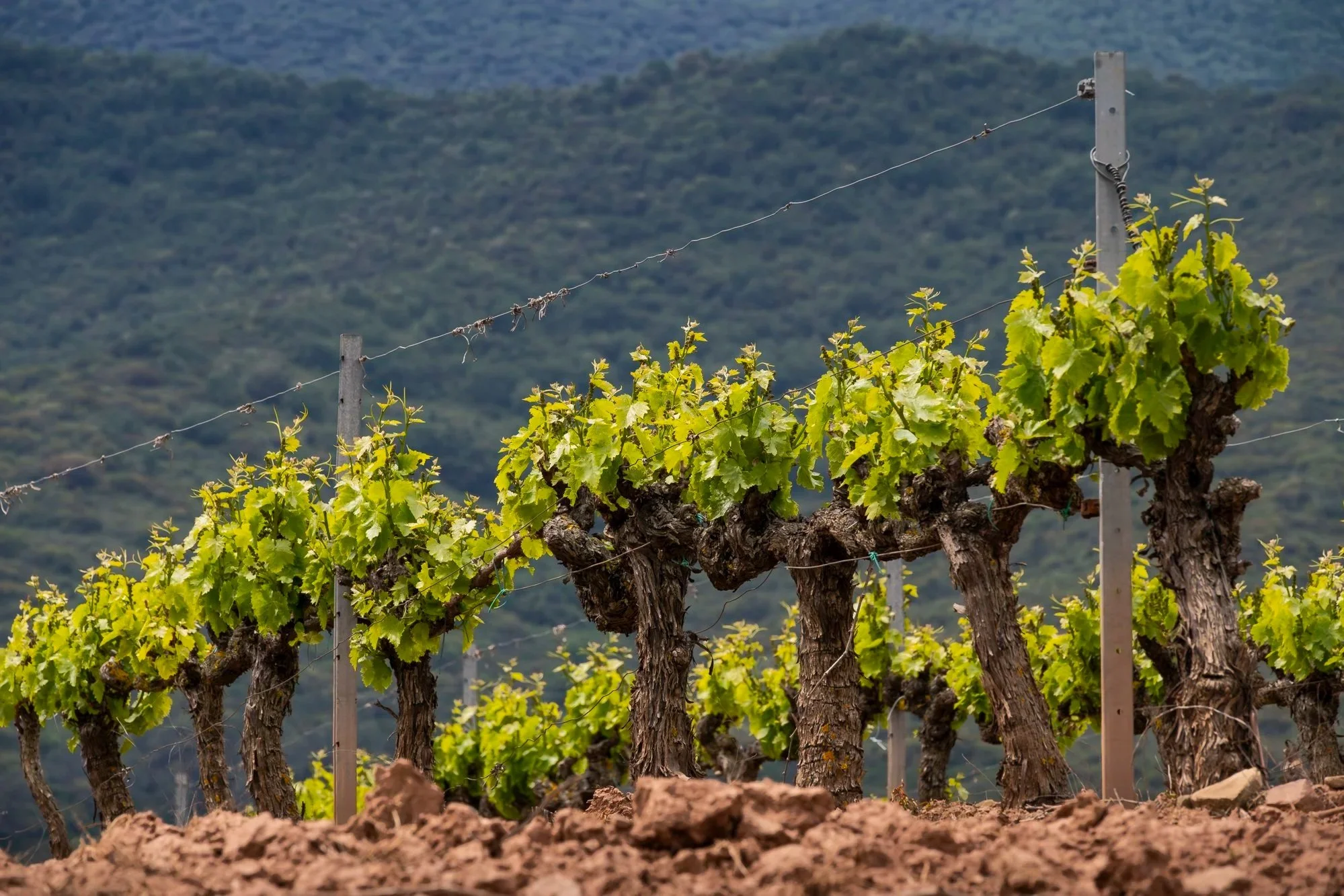
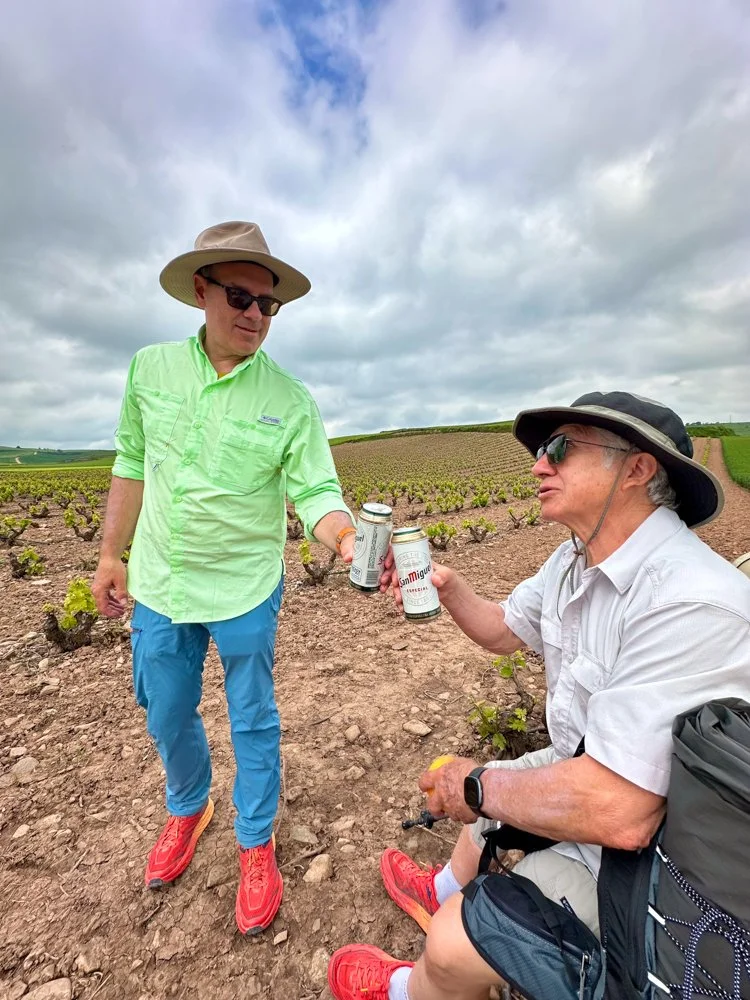
Vineyards along the way
One of the most meaningful things I discovered on our Camino journey was just how resilient the body and mind can be. As I mentioned before, we didn’t train for this experience, whether that was a smart decision or not, I’m still not sure. Along the way, we heard several people say that eventually everyone ends up with the same conditioning, because in the end, we’re all walking the same distance.
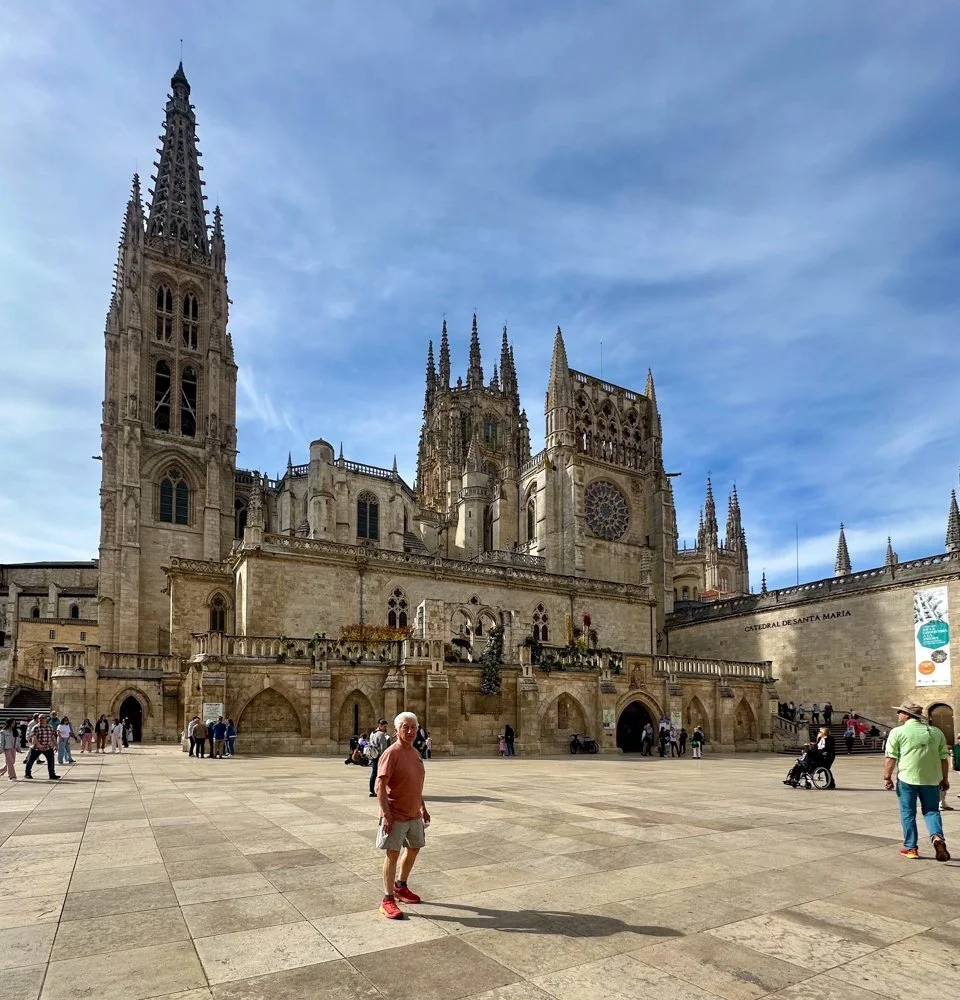
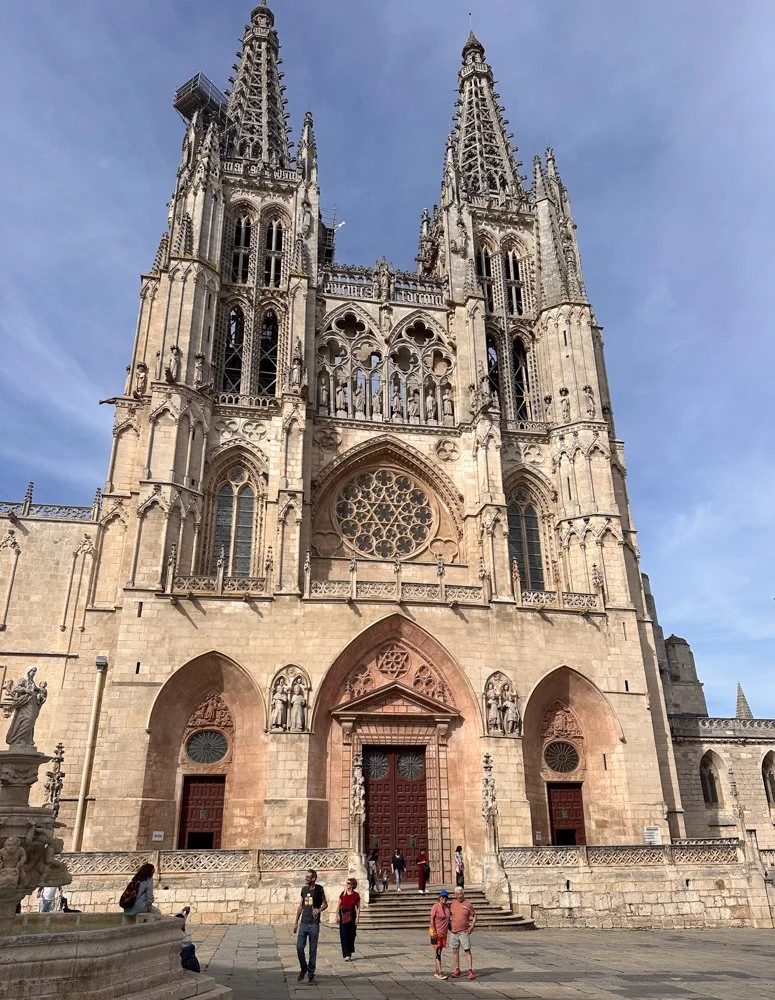
For Dave, one of the more special parts of walking the Camino was getting to see a part of Spain that you don’t often hear about or would not otherwise visit. Most often when people visit Spain, they go to the bigger or more popular cities. Even Burgos, which is a large city with an impressive cathedral, was not on our radar before this trip.
Before this day, my longest hike had been about 15 miles in a single day. What I hadn’t done, aside from a few backpacking trips no longer than four days, was hike every day, averaging about 13 miles daily. Over time, both your body and mind do adapt, but longer hikes still demand a lot of mental strength.
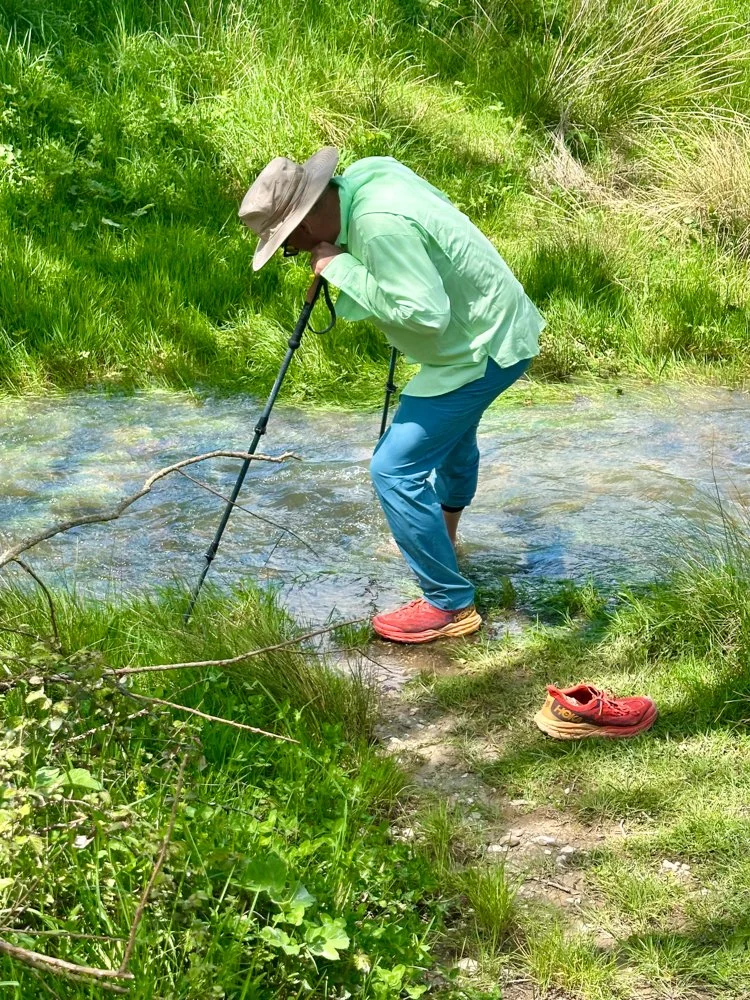
Our walk to Logroño was 18 miles, the longest stretch we had done so far. By then, my feet were hurting, and taping my knees had become routine. We never walked fast; instead, we took our time and enjoyed the views, the people, and the experience itself. We stopped often, which I needed so I could take off my shoes and massage my feet. I didn’t realize it at the time, but this was the beginning of plantar fasciitis, something I had never dealt with before.
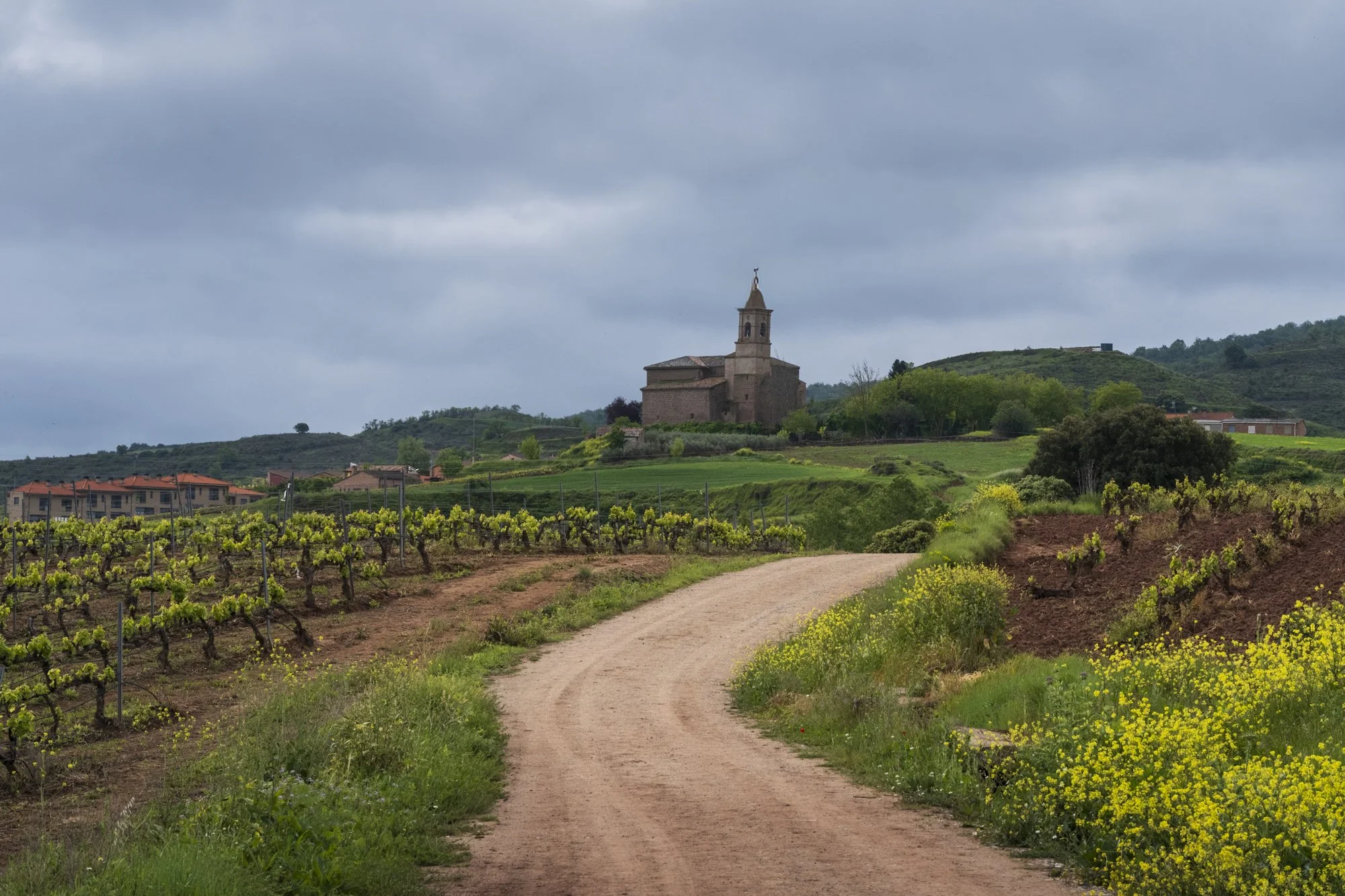
Our views did not suck
Around this point, I began to see the Camino as a symbol of life. And if you haven’t already realized it, the Camino offers a lot of time to think during those long daily walks. Some days were physically or mentally hard, while others felt lighter and easier, much like life itself. On the difficult days, we did exactly what we often do in life: we put one foot in front of the other and kept going. We didn’t know what lay ahead, but we didn’t quit just because it was hard.
We encouraged each other, walked alongside others, and offered support whenever we could. In turn, they encouraged us too. That shared support, both giving it and receiving it, made the journey not only possible, but deeply meaningful.
One of the big perks of traveling as a group of three is that the cost of renting an apartment versus staying in albergues ends up being almost the same. Apartments were sometimes a little more, but not by much. What we gained, though, made a huge difference: better sleep, a private bathroom, the ability to cook our own meals, and a place to do laundry, which became a daily task so whenever possible, we rented an apartment for the night.
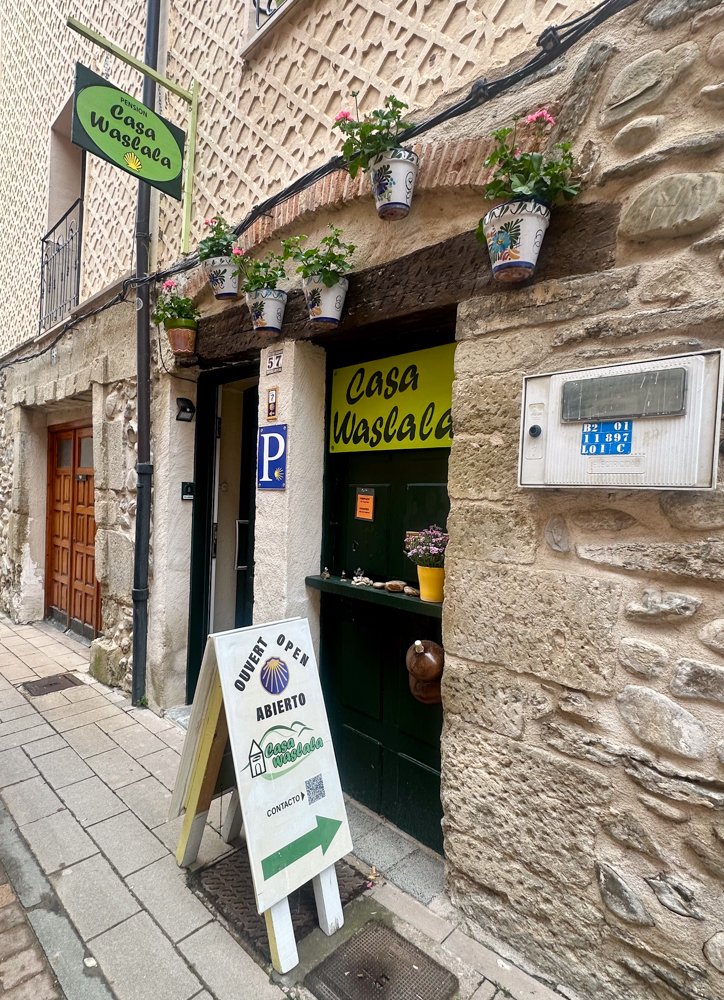
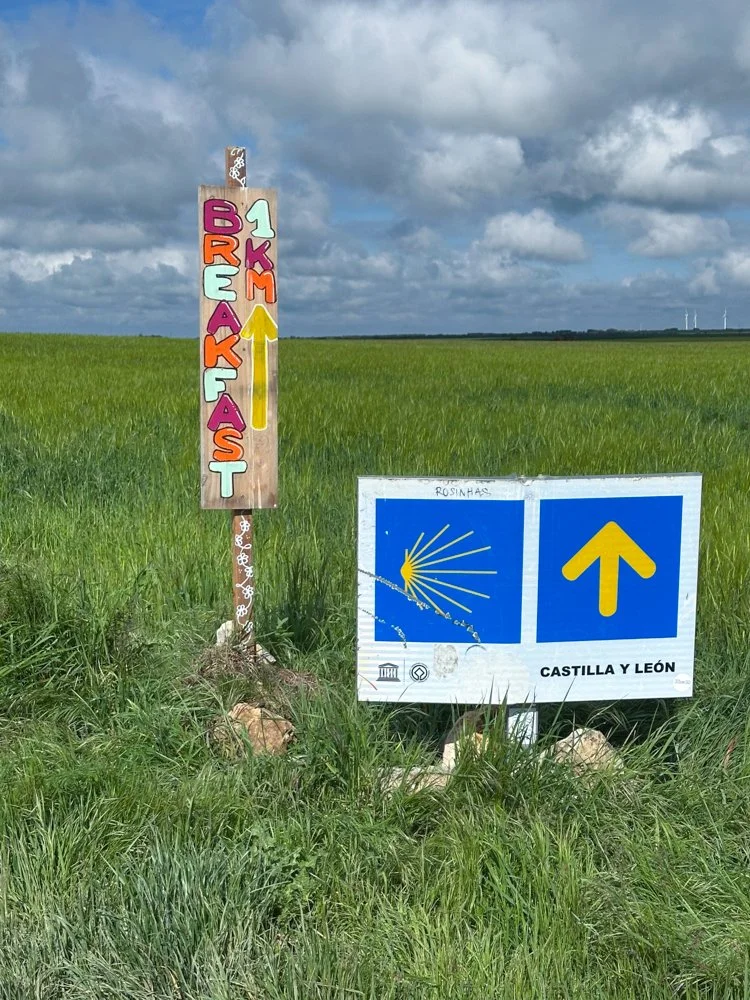
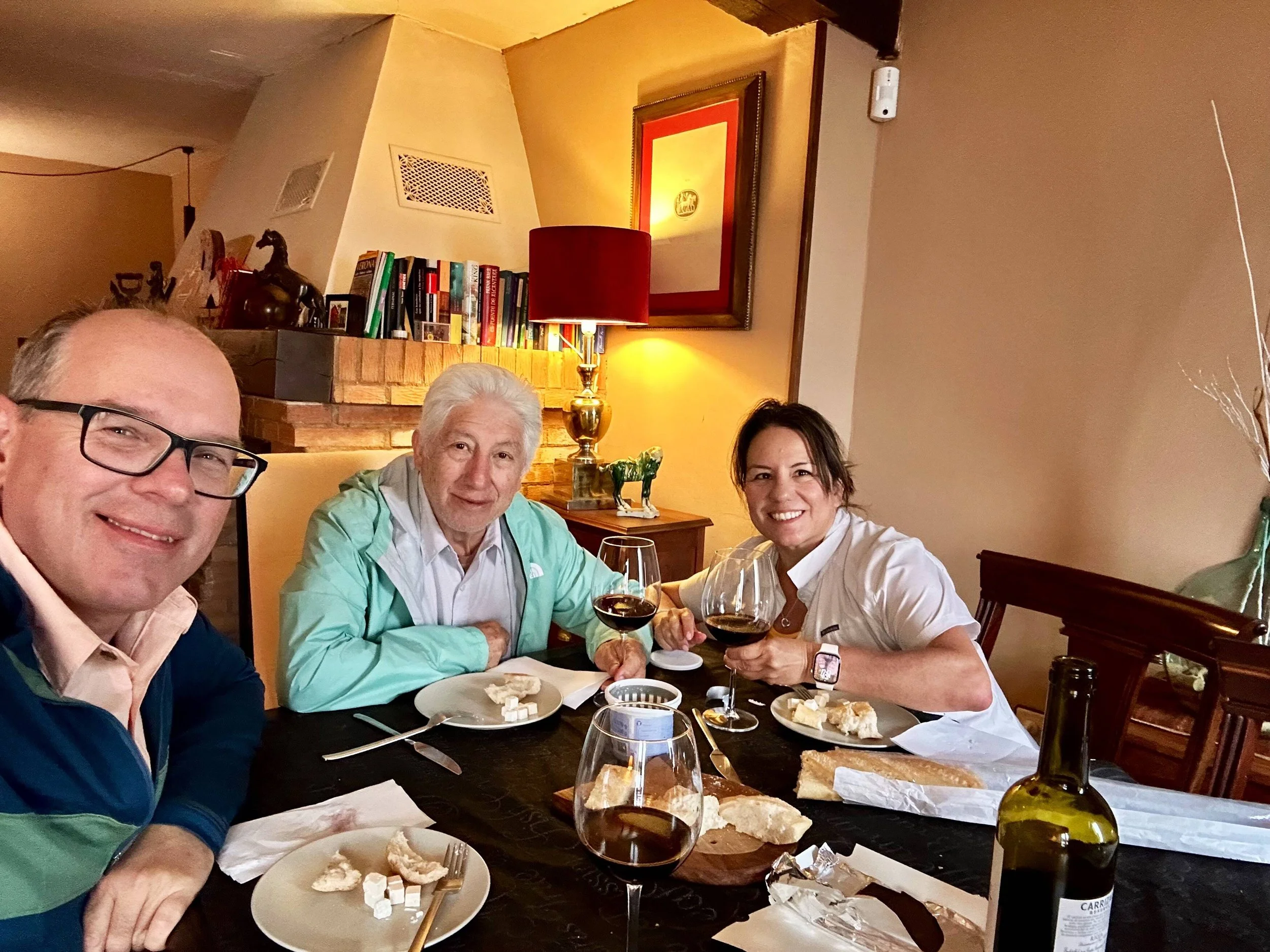
Another unexpected bonus was staying in historic buildings. Our room in Navarrete was in a beautifully renovated 17th-century house, and our apartment in Nájera was in a 500-year-old building. Staying in these places also meant more interaction with locals, our hosts, who shared stories, recommendations, and bits of history that we never would have learned otherwise.
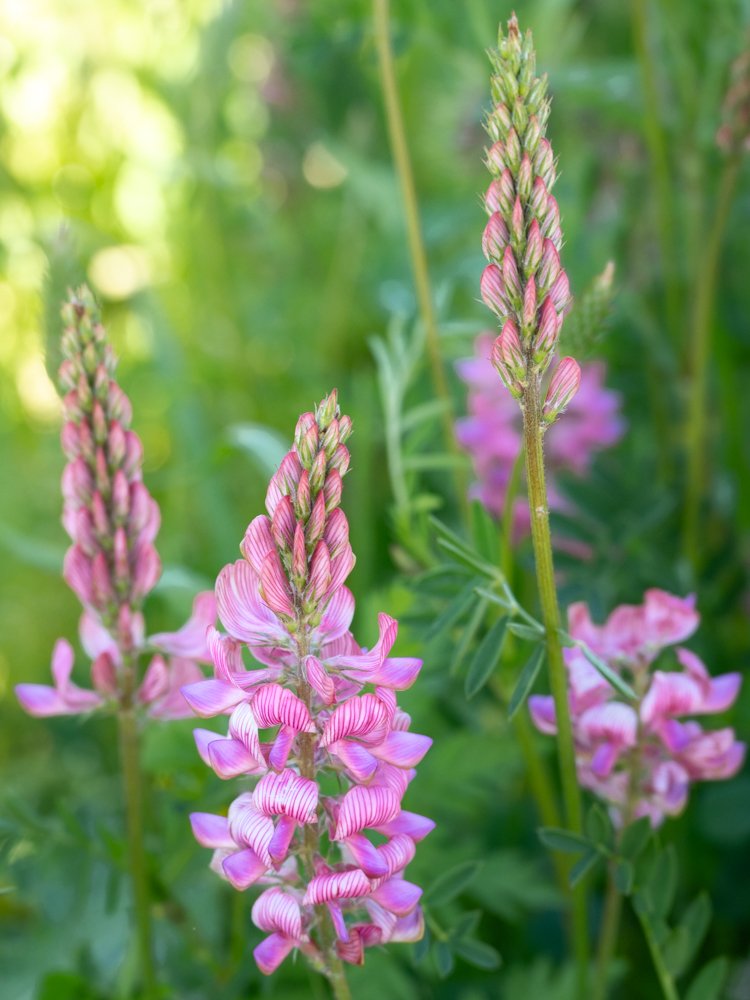
The rain had been on and off. Some days it rained for hours; other days it was just cloudy. Walking in the rain, on muddy trails and in the cold, isn’t exactly comfortable, but it keeps the fields green and the trails covered in wildflowers. These last sections have been lined with red poppies, daisies, and purple, white, pink, and yellow flowers, plus vast fields of rapeseed blanketing the landscape in vivid yellow. We’ve also walked through several vineyards, which was pretty special.
We used the Wise Pilgrim app to plan our routes, find places to stay and navigate through towns. Most of the time, we lucked out easily. Other times, our hosts went above and beyond by calling their own contacts in the next town to help us find a place to sleep.
In Belorado, we stayed at a small albergue owned by a Dutch and Nicaraguan couple, which came highly recommended on the app. It only had two rooms. Paul, our host, greeted us with hot, fresh coffee, a welcomed gesture after a long, rainy day of walking. He suggested we make reservations at the restaurant near the church and shared some of the town’s history with us.
The next morning, knowing my dad and I are from Mexico, the couple surprised us with brunch: black beans, eggs, bacon, hot sauce, yogurt, fresh fruit, and pastries. The addition of black beans and hot sauce was a thoughtful and sweet gesture.
We decided to break our hike to Burgos into two days. Paul recommended we make reservations at the only albergue in the next town, so we called ahead and explained that we were walking with my 79-year-old father and would be arriving after 2:00 p.m. They agreed to hold beds for us, we paid in advance, and off we went. Truth be told, my dad probably walks faster and better than both of us, but playing the “79-year-old dad” card worked out, because Dave ended up hurting his ankle and we walked much slower than usual.
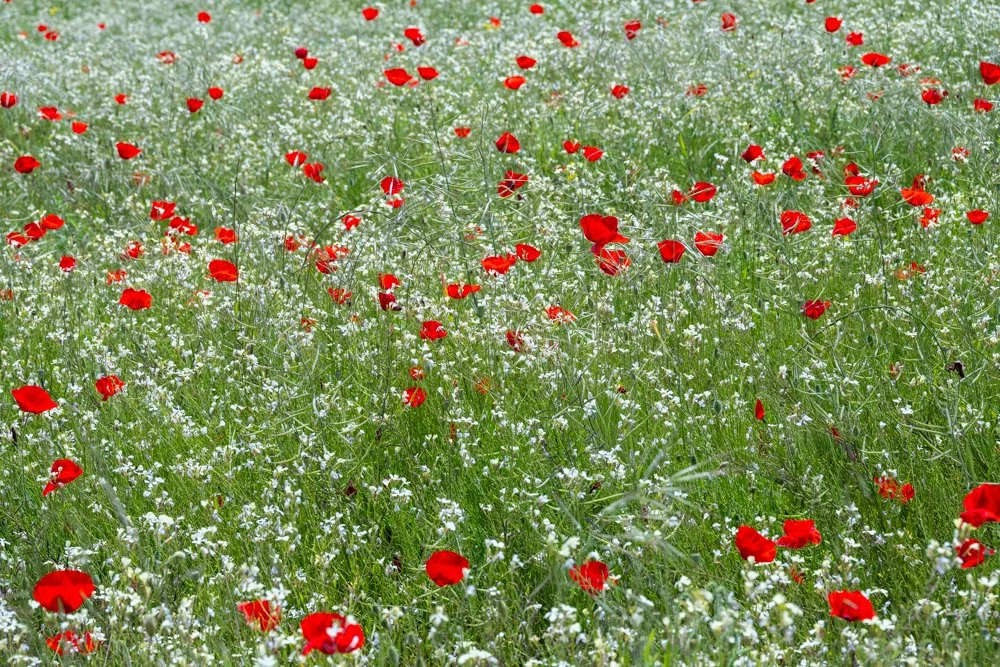
Wildflower blanketed fields
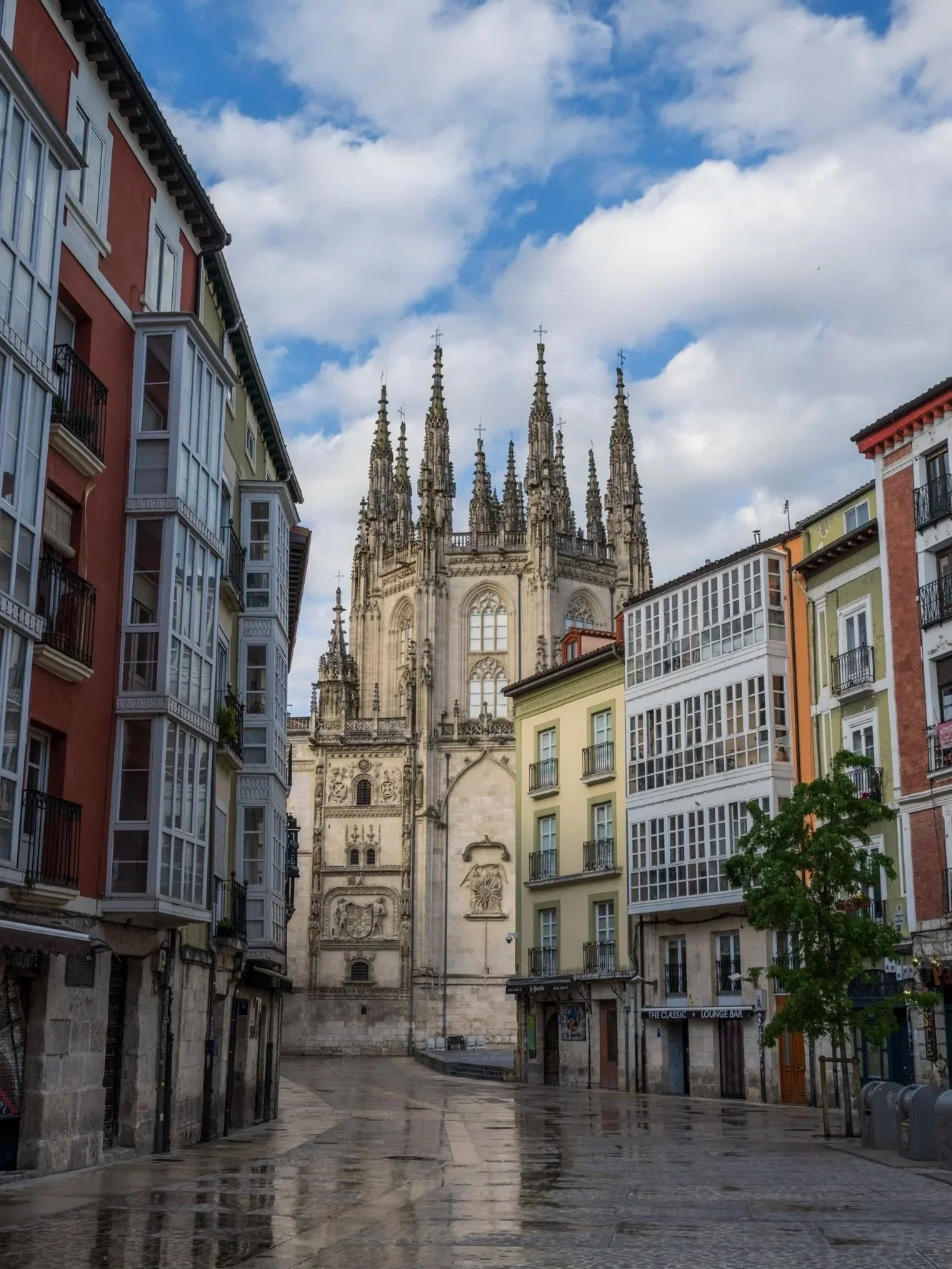
Burgos
The next day, we walked from Ages to Burgos, marking the end of the first section of the Camino, which is broken in three parts, the first part focuses on the body, second part focuses on the mind and third part focuses on the soul.
Our arrival into Burgos was… not great. We crossed highway overpasses, industrial areas, and walked along busy roads. As soon as we reached the outskirts of the city, we found a bus and took it into town. It was only 6 km, but we were tired and hot by then. We more than made up for those kilometers later while wandering the old town, visiting the cathedral, and exploring the city.
We were told that if we made it to Burgos, we “had a shoe in.” At this point we’d walked 190 miles, with about 300 still to go. Oufff!
