
Camino de Santiago - Sarria
Part 5 - Sahagun to Sarria
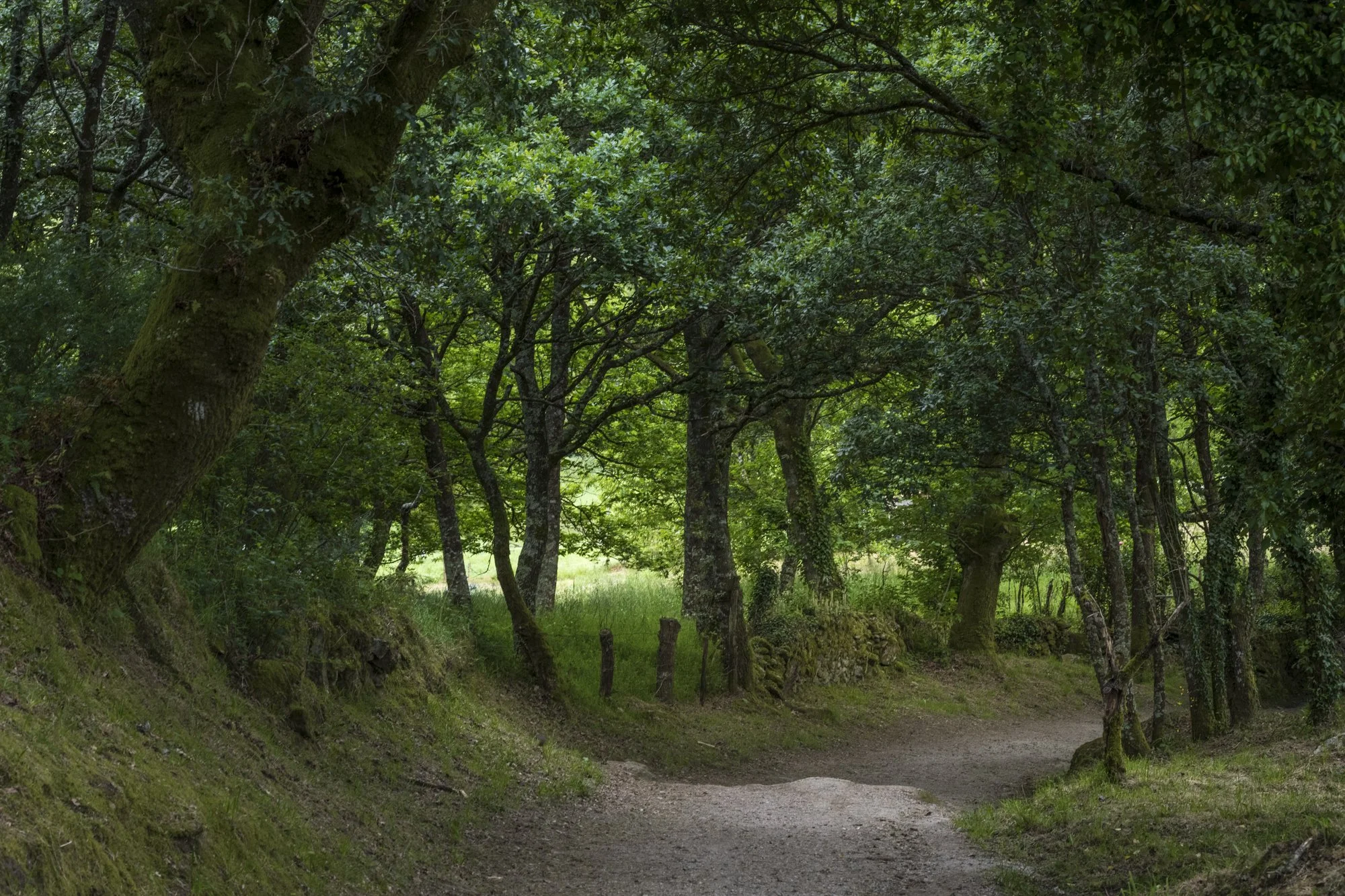
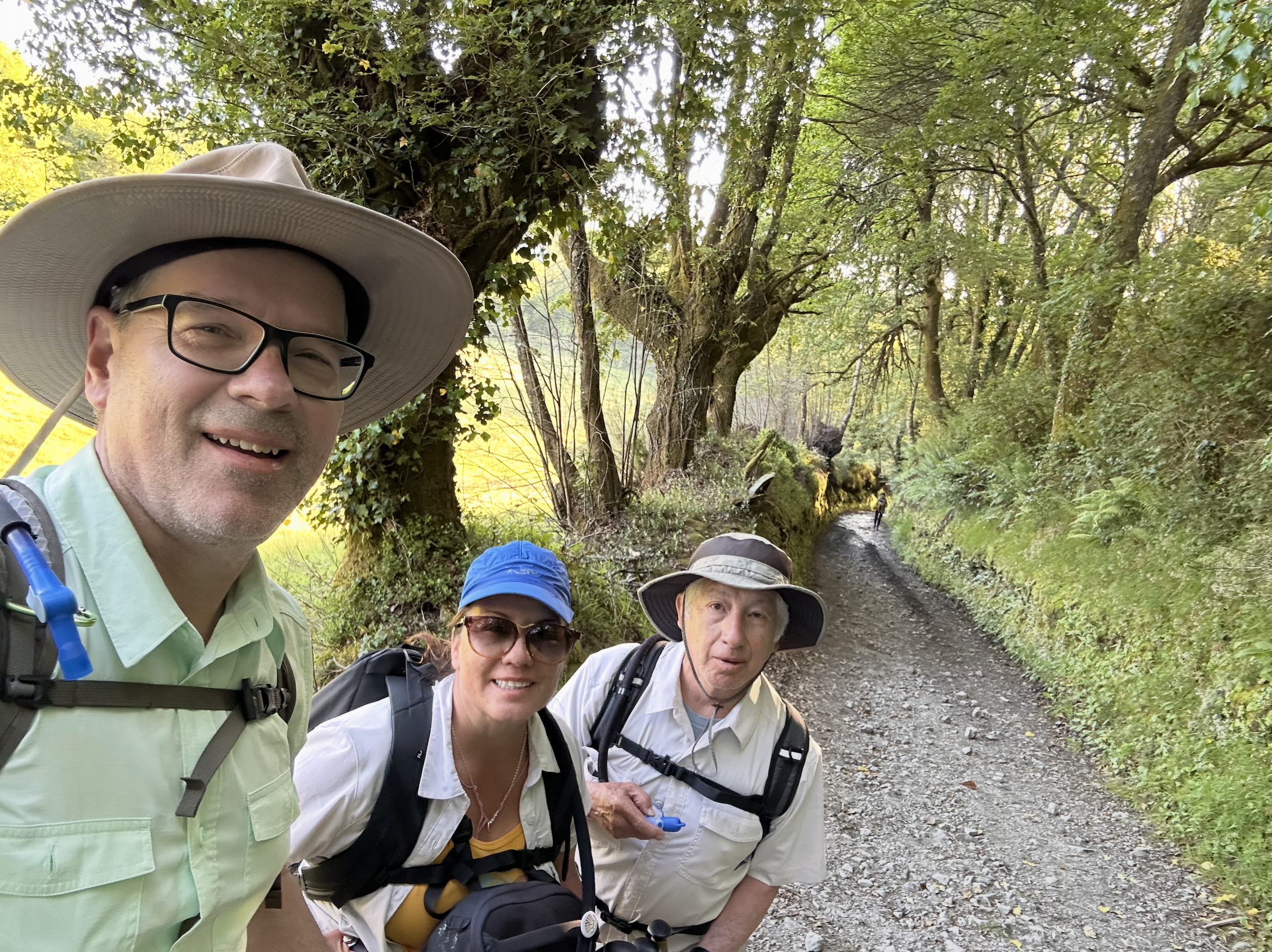
Some of the forests we walked through
Walking the Camino de Santiago had become more than just a physical journey for us, it was about discovering a piece of ourselves with every step taken. Sahagun marks the official halfway point on the French route of the Camino de Santiago. You can pick up a halfway certificate at the Santuario de la Virgen Peregrina to celebrate reaching this milestone on your journey. By then, we had walked about 270 miles. It was here that we realized we wouldn’t have enough time to finish the whole route and still enjoy Portugal before our flight home. When we asked Dad if he wanted to finish the entire Camino and rush to the airport, or skip a section, finish, and spend 10 days in Portugal, he chose the second option. I felt a mix of relief and disappointment, but mostly relief at this decision. While I was excited about the idea of exploring Portugal with Dave and Dad, it was bittersweet to think we would leave a portion of the Camino unwalked. I have a hard time quitting, as I see it as a form of defeat. Still, I wholeheartedly agreed that this decision would allow us to create new memories in Portugal. So, we took a taxi to Leon, spent a day exploring the city, then caught a train to Ponferrada to continue our journey. We skipped 80 miles of the route, but made up for it by walking around cities in Portugal.
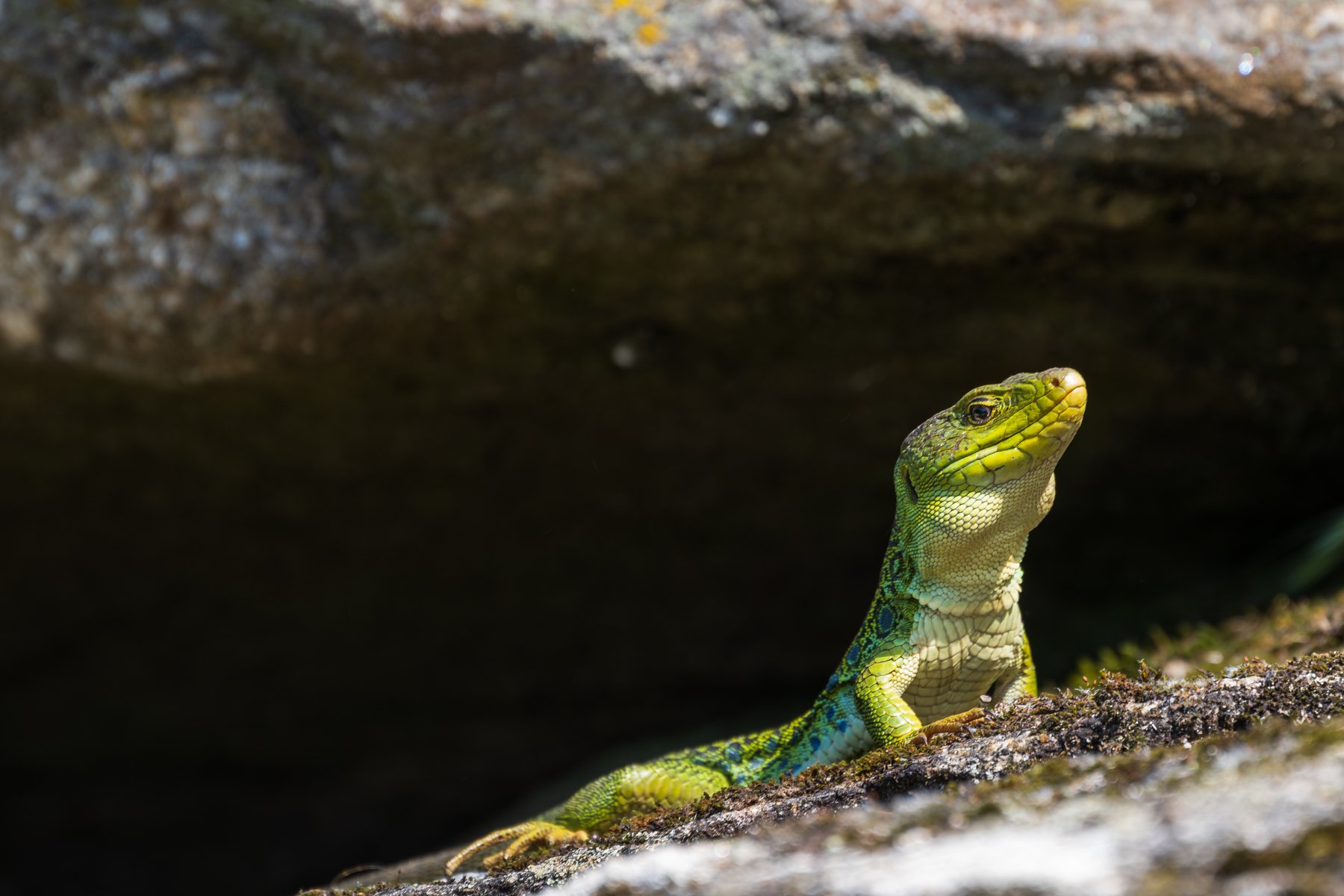
Little gecko we saw while talking with a Spanish hiker
We met so many people along the way. It’s true that you form a Camino family when you stay at Albergues, since everyone sits together and talks. We stayed in a few when there were no other options, but I preferred the better sleep we got in apartments whenever we could book them. One standout encounter was with a guy who had injured his ankle. We walked with him and talked to him for a while, keeping him company before moving on. Days later, we ran into him at one of the Albergues. My injured foot had continued to swell while his was better, so he gave me his wrap to help support my ankle. The mutual aid and camaraderie were heartwarming, leaving a lasting impression. We also met lots of locals who were curious about where we were from and why we were walking. They would share stories about their town before moving on.
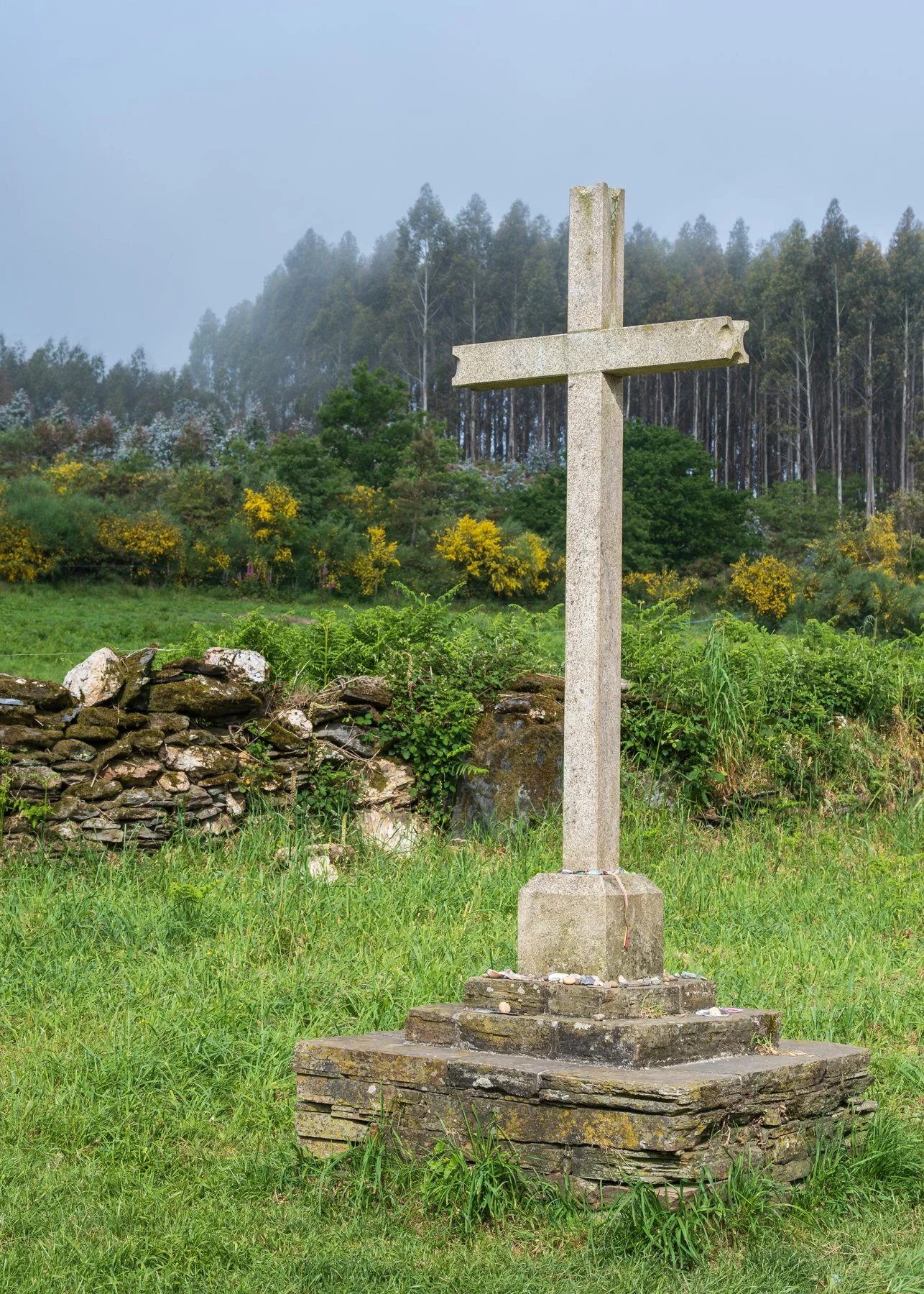
Crosses we started seeing along the way encouraging pilgrims to pause and reflect. These were in Galicia
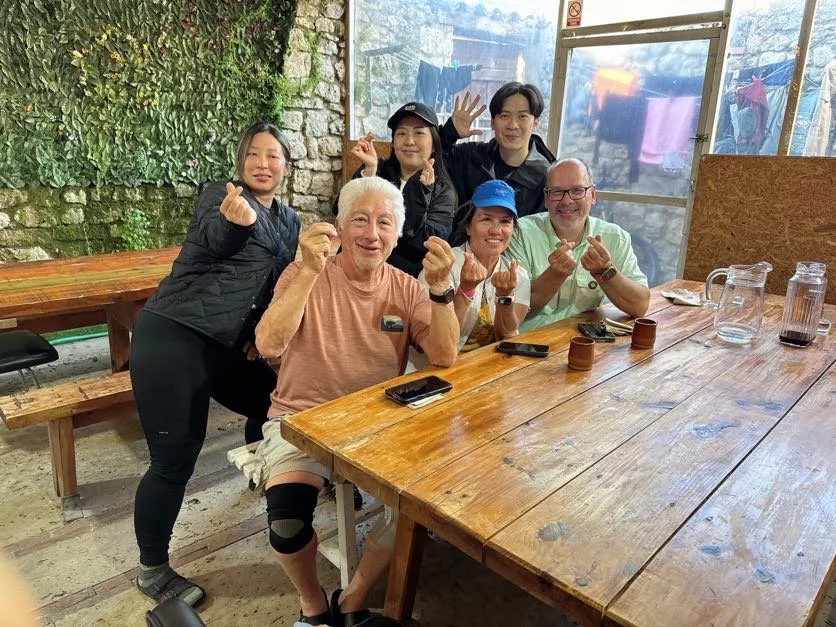
One day, an older gentleman walked with us for about an hour and asked, 'Where do you call home?' Before we knew it, we were trading stories: he, about doing this section of the hike every week to visit his grandkids in a small Spanish village, and us about hiking endless trails. Another day, a lively group of elementary school kids interviewed pilgrims as part of a school project to collect data and practice English. I remember one of them asking, 'Is the walk too difficult for you?' with wide, curious eyes. The curiosity they expressed seemed to highlight a cultural pride on the Camino. We saw three young adults from South Korea a few times and did our best to chat with them. Google Translate really helped us communicate, and soon we were all laughing over shared jokes.
We made our longest-lasting friendship with two Italian guys we first met in Villafranca, Salvatore and Carmelo. Dave noticed a small flag emblem and asked if they were Italian. Dave mentioned that his family lived in Slovenia in a town which was part of Italy when his dad was born. They thought he spoke Italian and switched to Italian, leaving him looking bewildered. I watched their hopeful faces, panicked, then surrendered to gesturing and using Google Translate. Since Spanish and Italian are similar, I could pick up some of what they said and translate for Dave, which made everyone laugh. We kept running into them all the way to Santiago. At one point Dave sat down on a stone wall to rest in the shade for a moment. As he stood up the one of the loose field stones that made up the wall fell. The Italians quickly pulled out badges and joked that they were going to arrest Dave for damaging the wall. It turned out they were Guardia di Finanza policemen back in Italy. Dave said he was fine with them arresting him but that they would have to carry him to jail in the next town. They decided to let him off with a warning. (Dave returned the stone to its place on the wall). We had dinner together a few times and used Google Translate to chat as we walked and ate. It was a lot of fun.
This friendship meant a lot to us. It added warmth and depth to our journey, transforming moments of tiredness and challenge into shared joy and laughter. There was one day when we walked together most of the way, and the day went by so fast. Knowing there were familiar faces along the way made the Camino feel like a shared adventure, one that was not just about the path we walked, but about the connections we made along it. Our friendship with the Italian guys enriched our journey, reminding us of the universal language of kindness and the unexpected bonds that can form along the way.
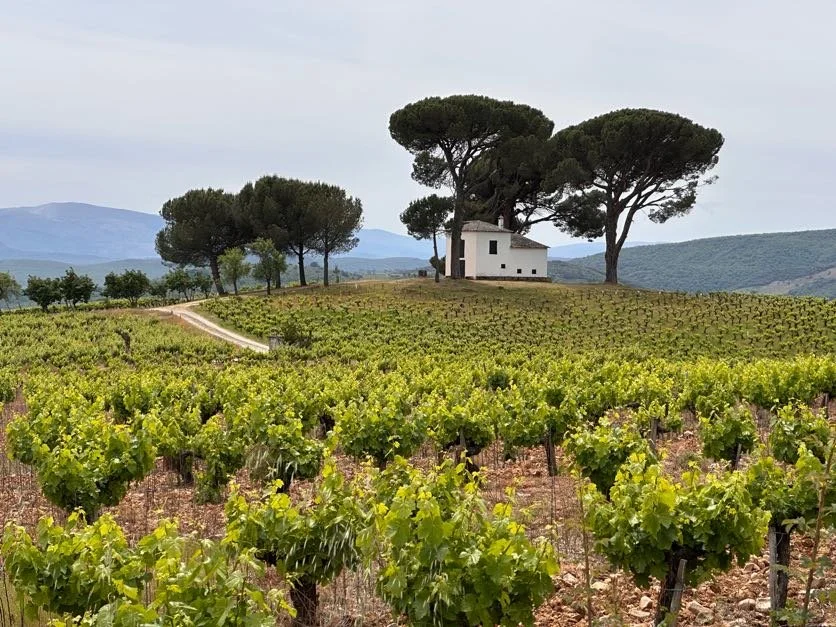
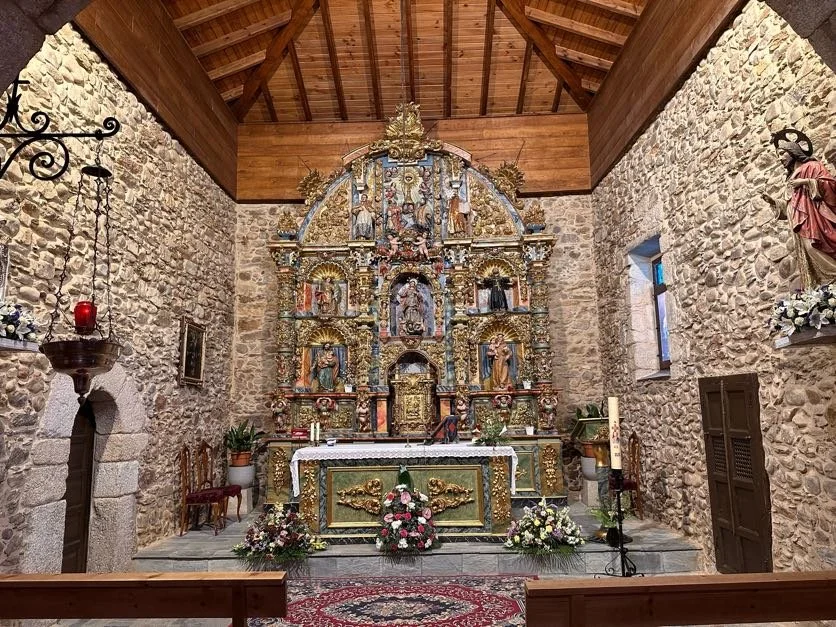
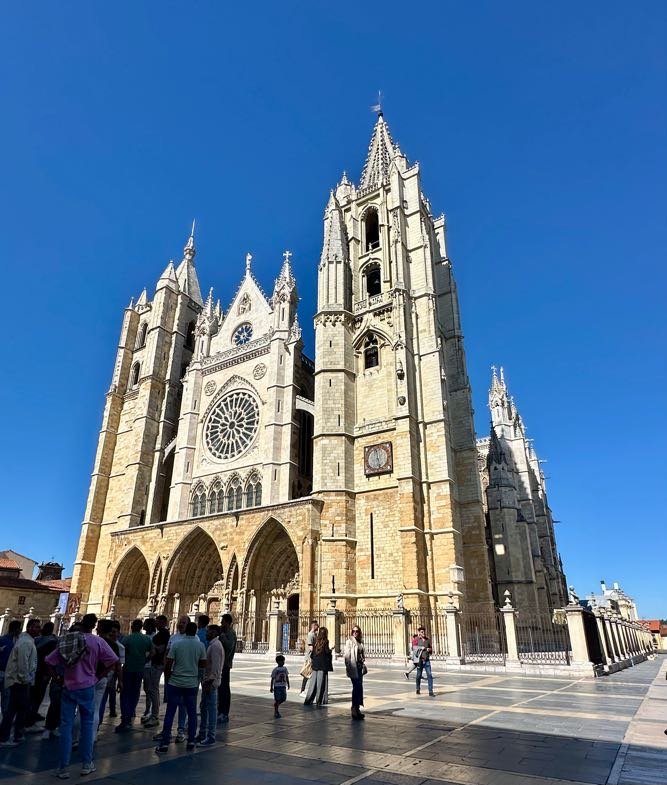
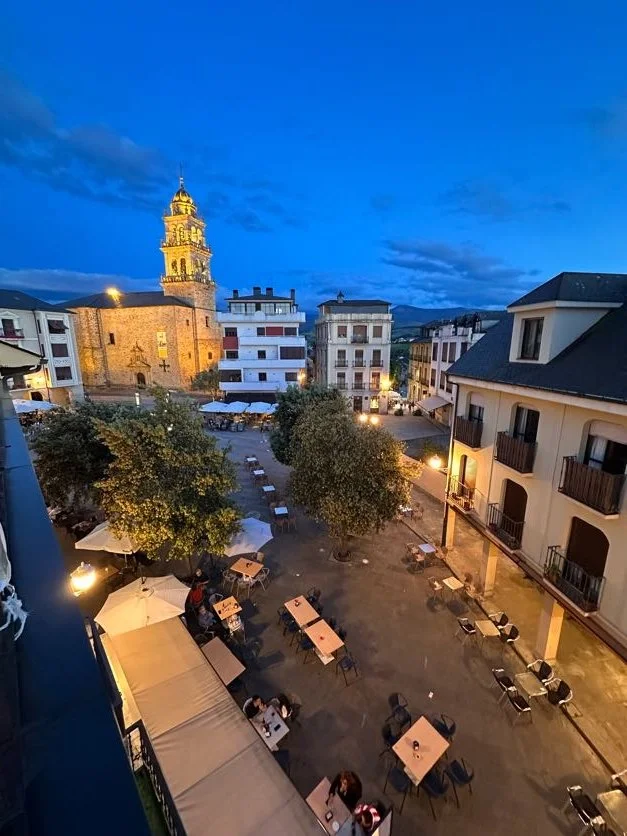
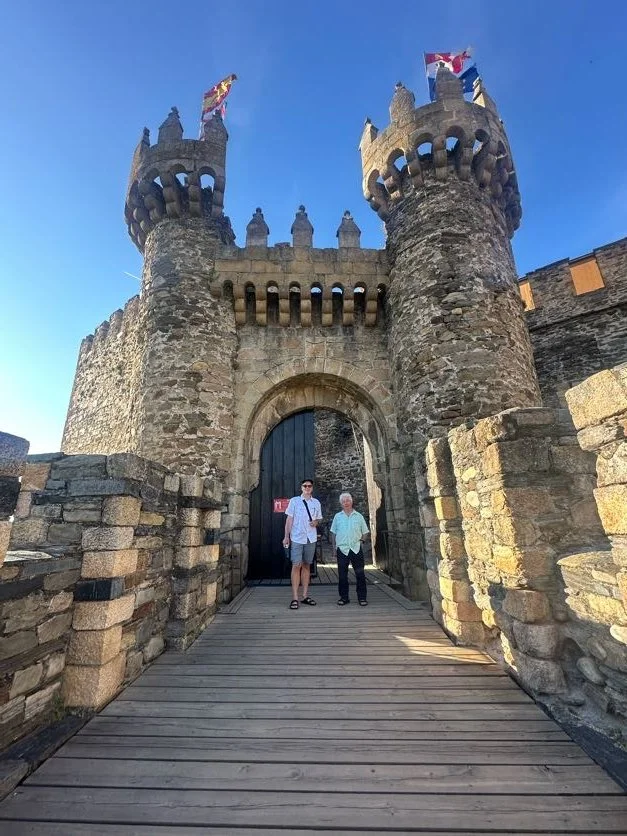
Let me backtrack a bit. In Ponferrada, we stayed in an apartment above the town square, which was a lot of fun. We enjoyed a glass of wine on the balcony while watching the sunset and listening to the church bells. We visited the castle and the church. The stunning Knights Templar castle was built in 1178 AD to protect the pilgrims traveling the Camino. In Villafranca, our apartment overlooked the river. We were back in wine country, which meant lots of hills to climb. The weather had changed from rainy to hot, so we started hiking early in the morning to avoid the heat. This also meant we ate a lot of ice cream. Our diet now consisted of ice cream, pastries, and beers. Not your ideal diet, but we enjoyed it!
Our hike to Laguna (O Cebreiro) was another tough one. Even though we started early, we still ended up climbing during the hottest part of the day. Dad climbed so quickly, I was feeling beaten and with no energy, and the sun beat down on us relentlessly. There was mud and horse manure covering the trail, and sweat dripped down, leaving a salty taste on my lips. I told him to go ahead, and he waited for us halfway up before we continued together. We ran into a guy with a couple of horses. His business was bringing up tired hikers to the top. Dave and I reached the albergue (the only one there) and went to the bar for drinks. We thought Dad would be there, but he wasn’t. After searching, I called him (thank goodness for cell service!) and found out he was still trudging up the hill. I told him he had passed the place and needed to come back. He finally arrived, red-faced and hot, and was very happy to have a cold beer waiting for him.
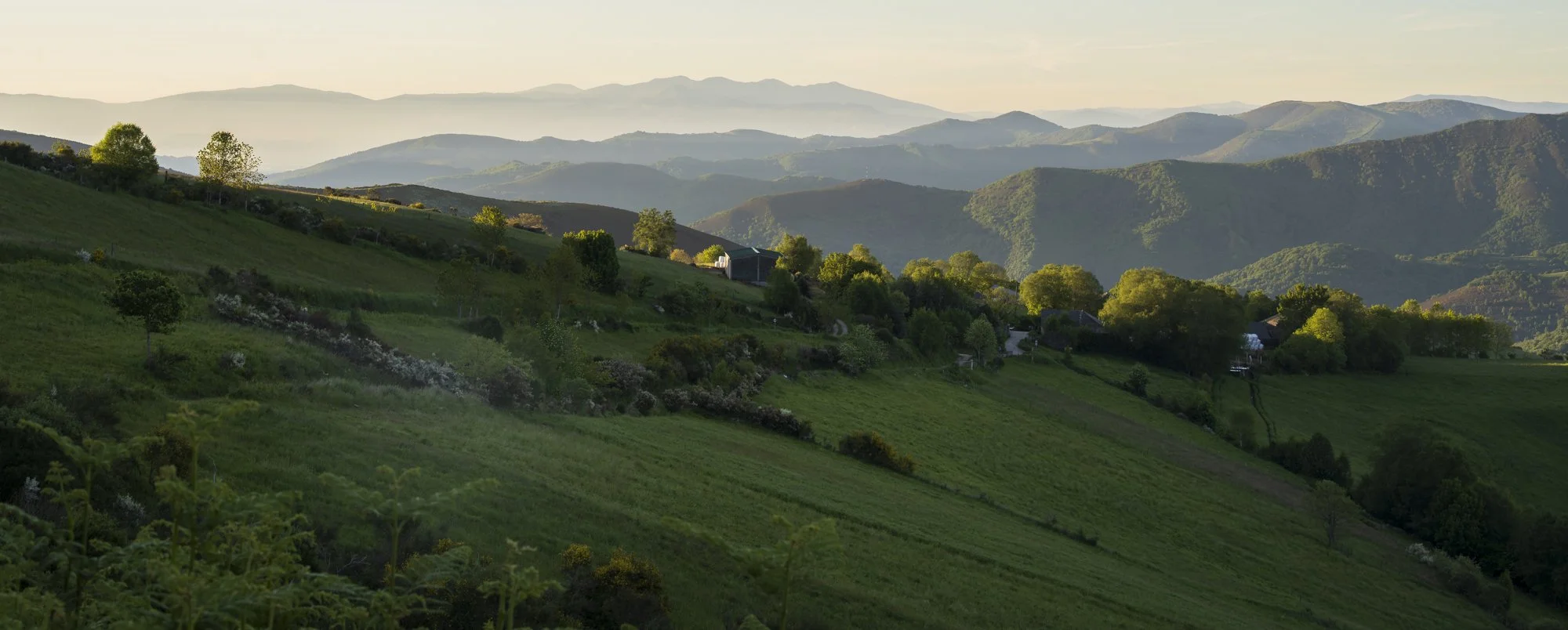
Views like this were priceless! Even if we had to walk up hill forever, they were worth it.
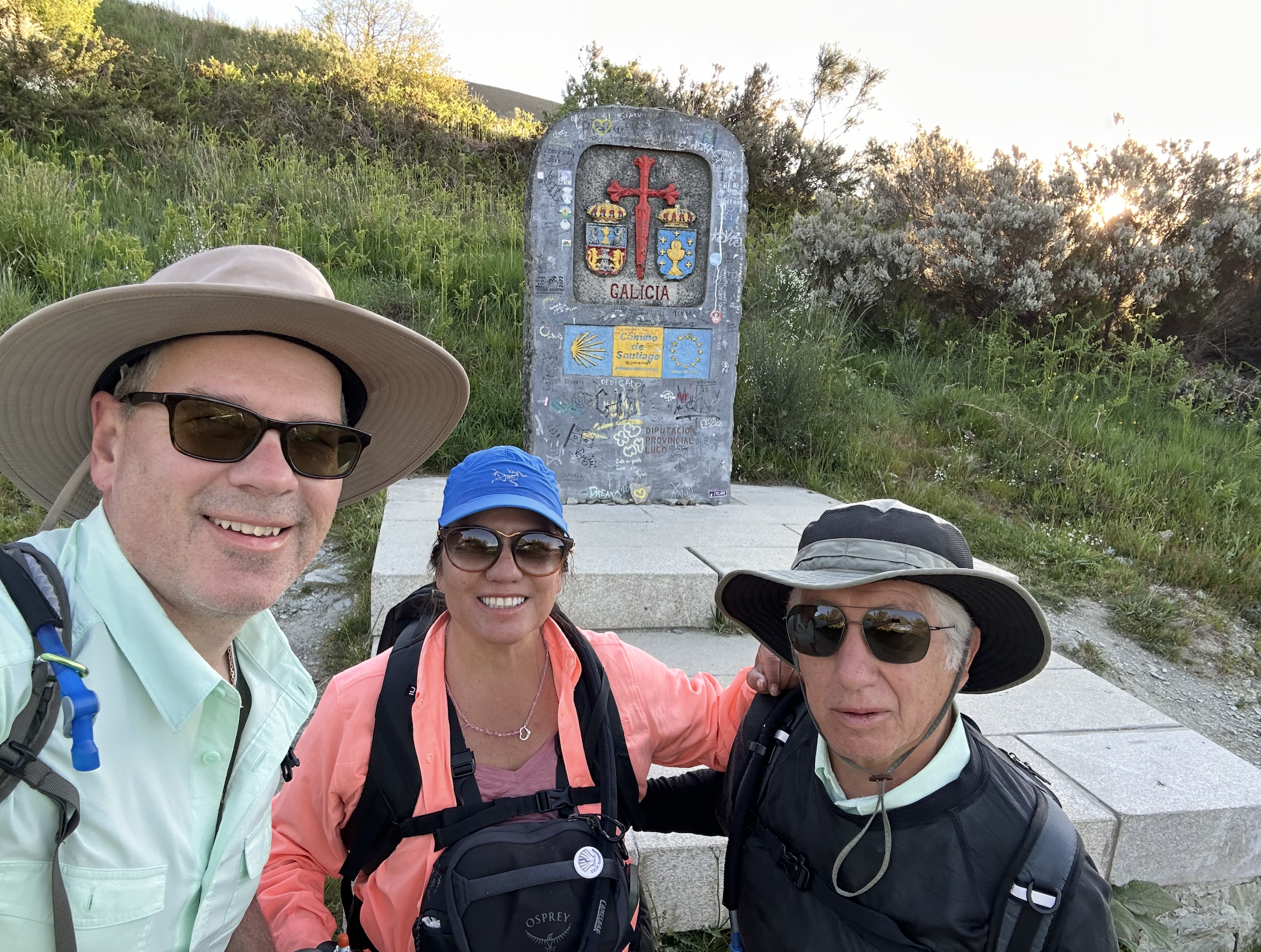
The next morning, we had about three more kilometers of uphill climbing. We crossed into Galicia, the last Autonomous Community (state) in Spain that we would walk through on foot.
We started seeing a lot more people at this point, and the experience felt different. We saw a bus drop off a group of teenagers who were starting their hike to Santiago from here. We walked to Triacastela, ran into our Italian friends again, and then continued to Sarria. If you start the Camino in Sarria, it counts toward the minimum distance needed to get a Compostela, the official document that proves you walked at least the last 100 km to Santiago. You show proof with the passport you get at the start, which is stamped along the way.
I found that one of my favorite things was stopping for coffee along the way, even in the middle of the day. We usually ordered a cortado (which was tiny), fresh-squeezed orange juice, and a croissant or napolitano. We never rushed, and it was nice to relax and enjoy these small towns during our breaks. We loved running into fellow hikers and familiar faces.
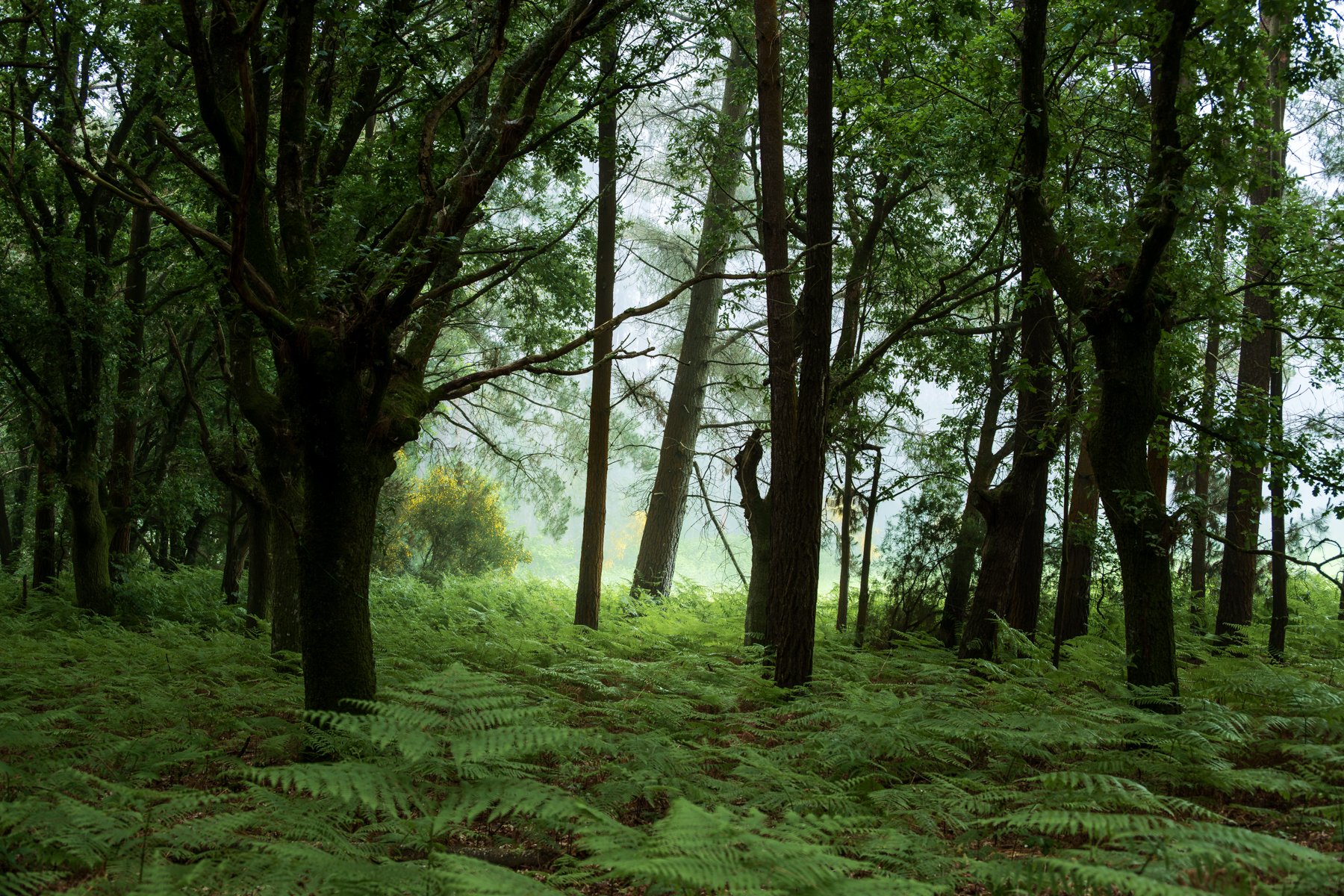
More forests with early morning fog
